Welcome to the fourth edition of the Four Stone Hearth Anthropology Blog Carnival. The excitement that was generated from all the Neanderthal DNA papers will be a hard act to follow, but it looks like we have many excellent, thought provoking submissions. We’ll go field by field and due to my bias, we'll begin with Biological Anthropology.
Biological Anthropology
Afarensis starts us off with a great review of a recent paper describing the results of an experiment where one species of baboon was mated (willingly or not, I don't know) with another species of baboons mainly to see if good (heterosis) or bad things (dysgenesis) resulted. The authors note that this is a good model with which to examine the likelihood of hybridization between homo species. One thing I remember from this paper was that the matings were always the male of one species with the female of the other species, or some sort of analogous asymmetry.
In light of all the exciting things happening in Molecular Anthropology these days, I'm happy that Kambiz from Anthropology.net submitted his piece on copy number variation (CNV in the human genome. Kambiz does a really thorough job of introducing the basic concepts and the major findings from the study. As we continue to study the genomes (and continue to develop better ways to look at it) we are finding more and more sources of complexity. If I remember correctly, the researchers were able to assess a small fraction of these CNVs (only the big ones) as most of them are small repeats. Kambiz reviews the health implications these CNVs might have and how they cluster human population-wise.
Cultural Anthropology
Martin Rundkvist's submission called Leave the Ghetto from his blog Saltos Sobrius is very thought provoking and throws up the question of whether distinct minority cultures and ethnicities should be maintained or encouraged under a nation-state system. He makes the argument that to reduce inequalities, the minority cultures/ethnicities must "assume places inside majority society through education and employment". Even with programs like affirmative action in the US, progress in this area is very slow, highlighting the extent to which the generational cycle of economic class is very hard to break. This goes hand in hand with the fact that when times are tough, humans tend to rely even more on their groups (ethnic or otherwise) as buffering and support systems. This provides me with the perfect segue to the next submission about how disconnected our modern lives may be.
William Klinger at Nomadic Thoughts has submitted his post entitled Social (dis)connections. He discusses a New York Times op-ed piece which talks about how our social lives have been transformed from many face to face interactions to interactions through text and voice. I have heard stories about how the circle of friends of average Americans has been getting smaller as we lead more individualistic lives. The author of this piece presents a balanced description of what may be going on. As Will Klinger puts it: "The reason Johnson’s post satisfies me is because it strikes a happy medium between a hypersensitivity to the effects of technology in our lives on the one hand and the unbridled technophilia that so many of my generation have succumbed to"
Over at Wanna be an Anthropologist, Paul Wren has submitted a post about Anthropology on the Moon. In it, he discusses how NASA plans to install a permanent base on the moon where people will be stationed. He then discusses all the things that anthropologists might like to study in this type of a living situation (development of culture, social dynamics, marriage and kinship) I've often wondered myself if there are anthropologists out there taking down data from TV shows like Survivor.
Lexis2Praxis has a post at Anthropology.net that examines the anthropology of the modern office space. Like any living environment of humans, each place develops its own set of cultural norms. These are discussed in the post. It reminds me of the movie Office Space. There is also a post on our networked culture and who gets to participate and who doesn't.
Archaeology
Lucy Jr. at The Second Sight has this entry which is a commentary on paleoanthropologists behaving badly over the Hobbit find in Flores Island, Indonesia. According to Lucy Jr., actions taken and the interpretation of the find was not so much of scientists interpreting a discovery, as a drama of passion, jealousy and old rivalries. Please click on the links of the characters in this story, as I was pleasantly surprised to see links to websites of actual researchers who, I assume, are working in Flores.
Stolen and Looted: Cultural History Lost and Destroyed for a Buck is the title of a post by Carl Feagans at Hot Cup of Joe. Here, we learn that many archaeological sites in Peru, Iraq, South East Asia and the American Southwest are under the threat of looting for archaeological treasures that can be sold for profit. Some quite stunning photos of looted sites are shown in the post...pretty surreal!! Also, check out his other post: Stolen and Looted: Who Does the Past Belong To? for related information.
K. Kris Hirst at Archaeology.com has submitted an interesting piece on Damascus Steel. Apparently this is a type of steel used to make blades around the 11 or 12th century AD that seems to be very sophisticated and must have required a high level of technology to make, thus mystifying archaeologists.
Last but not least, Johan Normark at Archaeolog has submitted a post on Polyagentive Archaeology. "The polyagentive approach primarily differs from the humanocentric archaeology in that it tries to decentralize the human, to give an account of active tangible archaeological materialities and intangibilities (anything that can be perceived but which is not solid or palpable). This approach also aims to initially de-culturalize and de-socialize the past by emphasizing what lasts, differentiates and repeats."
Well, there we are. I hope that everyone enjoys this. I think we had a good turnout from the Cultural Anthropologists and the Archaeologits. It would have been nice to have a few more bio submissions (I'll take some blame for that, given my lack of a submission) and some linguistic submissions.
Wednesday, December 06, 2006


Tuesday, December 05, 2006
Requesting submissions for Four Stone Hearth Anthropology Blog Carnival
If any of you bloggers out there have any submissions for the latest edition of the Four Stone Hearth Anthro. Blog Carnival, please email them as soon as possible to submit@fourstonehearth.net. These can be any posts related in any way to Anthropology. I will then put all the submissions together in a sort of highlights post of all the submissions, meant to reflect what is being blogged about at this time in the area of Anthropology.
Monday, December 04, 2006
New book about Omega-3 fatty acids
 Here's a review in Nature of a new book on Omega-3 fatty acids:
The Queen of Fats: Why Omega-3s Were Removed from the Western Diet and What We Can Do to Replace Them
by Susan Allport
University of California Press: 2006. 232 pp. $22.50, £14.95
Thursday, November 30, 2006
Malfunctioning links
I just realized that a lot of the links to abstracts or journal papers on my posts don't work. I'll pay more attention to making sure the links work in future posts.
The genetics of lactase persistence in different populations
adaptation by whatever means available, like skin color and adaptation to high altitude.
A novel polymorphism associated with lactose tolerance in Africa: multiple causes for lactase persistence?
Catherine J. E. Ingram, Mohamed F. Elamin, Charlotte A. Mulcare, Michael E. Weale, Ayele Tarekegn, Tamiru Oljira Raga, Endashaw Bekele, Farouk M. Elamin, Mark G. Thomas, Neil Bradman and Dallas M. Swallow
Human Genetics Published online: 21 November 2006
Abstract: Persistence or non-persistence of lactase expression into adult life is a polymorphic trait that has been attributed to a single nucleotide polymorphism (C-13910T) in an enhancer element 13.9 kb upstream of the lactase gene (LCT). The -13910*T allele occurs at very high frequency in northern Europeans as part of a very long haplotype (known as A), and promotes binding of the transcription factor Oct-1. However, -13910*T is at very low frequency in many African milk drinking pastoralist groups where lactase persistence phenotype has been reported at high frequency. We report here for the first time, a cohort study of lactose digester and non-digester Sudanese volunteers and show there is no association of -13910*T or the A haplotype with lactase persistence. We support this finding with new genotype/phenotype frequency comparisons in pastoralist groups of eastern African and Middle Eastern origin. Resequencing revealed three new SNPs in close proximity to -13910*T, two of which are within the Oct-1 binding site. The most frequent of these (-13915*G) is associated with lactose tolerance in the cohort study, providing evidence for a cis-acting effect. Despite its location, -13915*G abolishes, rather than enhances Oct-1 binding, indicating that this particular interaction is unlikely to be involved in lactase persistence. This study reveals the complexity of this phenotypic polymorphism and highlights the limitations of C-13910T as a diagnostic test for lactase persistence status, at least for people with non-European ancestry.
A novel polymorphism associated with lactose tolerance in Africa: multiple causes for lactase persistence?
Catherine J. E. Ingram, Mohamed F. Elamin, Charlotte A. Mulcare, Michael E. Weale, Ayele Tarekegn, Tamiru Oljira Raga, Endashaw Bekele, Farouk M. Elamin, Mark G. Thomas, Neil Bradman and Dallas M. Swallow
Human Genetics Published online: 21 November 2006
Abstract: Persistence or non-persistence of lactase expression into adult life is a polymorphic trait that has been attributed to a single nucleotide polymorphism (C-13910T) in an enhancer element 13.9 kb upstream of the lactase gene (LCT). The -13910*T allele occurs at very high frequency in northern Europeans as part of a very long haplotype (known as A), and promotes binding of the transcription factor Oct-1. However, -13910*T is at very low frequency in many African milk drinking pastoralist groups where lactase persistence phenotype has been reported at high frequency. We report here for the first time, a cohort study of lactose digester and non-digester Sudanese volunteers and show there is no association of -13910*T or the A haplotype with lactase persistence. We support this finding with new genotype/phenotype frequency comparisons in pastoralist groups of eastern African and Middle Eastern origin. Resequencing revealed three new SNPs in close proximity to -13910*T, two of which are within the Oct-1 binding site. The most frequent of these (-13915*G) is associated with lactose tolerance in the cohort study, providing evidence for a cis-acting effect. Despite its location, -13915*G abolishes, rather than enhances Oct-1 binding, indicating that this particular interaction is unlikely to be involved in lactase persistence. This study reveals the complexity of this phenotypic polymorphism and highlights the limitations of C-13910T as a diagnostic test for lactase persistence status, at least for people with non-European ancestry.
Tuesday, November 28, 2006
Tying testosterone, immune function, and sexual signaling.
From what I can glean, testosterone increases coloration, but is also immunosuppressant, and it seems like extra carotenoids are first diverted to immune function, then to coloration thus providing an honest signal.
Testosterone increases bioavailability of carotenoids: Insights into the honesty of sexual signaling
J. Blas, L. Pérez-Rodríguez, G. R. Bortolotti, J. Viñuela , and T. A. Marchant
PNAS Published online before print November 22, 2006
Abstract: Androgens and carotenoids play a fundamental role in the expression of secondary sex traits in animals that communicate information on individual quality. In birds, androgens regulate song, aggression, and a variety of sexual ornaments and displays, whereas carotenoids are responsible for the red, yellow, and orange colors of the integument. Parallel, but independent, research lines suggest that the evolutionary stability of each signaling system stems from tradeoffs with immune function: androgens can be immunosuppressive, and carotenoids diverted to coloration prevent their use as immunostimulants. Despite strong similarities in the patterns of sex, age and seasonal variation, social function, and proximate control, there has been little success at integrating potential links between the two signaling systems. These parallel patterns led us to hypothesize that testosterone increases the bioavailability of circulating carotenoids. To test this hypothesis, we manipulated testosterone levels of red-legged partridges Alectoris rufa while monitoring carotenoids, color, and immune function. Testosterone treatment increased the concentration of carotenoids in plasma and liver by >20%. Plasma carotenoids were in turn responsible for individual differences in coloration and immune response. Our results provide experimental evidence for a link between testosterone levels and immunoenhancing carotenoids that (i) reconciles conflicting evidence for the immunosuppressive nature of androgens, (ii) provides physiological grounds for a connection between two of the main signaling systems in animals, (iii) explains how these signaling systems can be evolutionary stable and honest, and (iv) may explain the high prevalence of sexual dimorphism in carotenoid-based coloration in animals.
Testosterone increases bioavailability of carotenoids: Insights into the honesty of sexual signaling
J. Blas, L. Pérez-Rodríguez, G. R. Bortolotti, J. Viñuela , and T. A. Marchant
PNAS Published online before print November 22, 2006
Abstract: Androgens and carotenoids play a fundamental role in the expression of secondary sex traits in animals that communicate information on individual quality. In birds, androgens regulate song, aggression, and a variety of sexual ornaments and displays, whereas carotenoids are responsible for the red, yellow, and orange colors of the integument. Parallel, but independent, research lines suggest that the evolutionary stability of each signaling system stems from tradeoffs with immune function: androgens can be immunosuppressive, and carotenoids diverted to coloration prevent their use as immunostimulants. Despite strong similarities in the patterns of sex, age and seasonal variation, social function, and proximate control, there has been little success at integrating potential links between the two signaling systems. These parallel patterns led us to hypothesize that testosterone increases the bioavailability of circulating carotenoids. To test this hypothesis, we manipulated testosterone levels of red-legged partridges Alectoris rufa while monitoring carotenoids, color, and immune function. Testosterone treatment increased the concentration of carotenoids in plasma and liver by >20%. Plasma carotenoids were in turn responsible for individual differences in coloration and immune response. Our results provide experimental evidence for a link between testosterone levels and immunoenhancing carotenoids that (i) reconciles conflicting evidence for the immunosuppressive nature of androgens, (ii) provides physiological grounds for a connection between two of the main signaling systems in animals, (iii) explains how these signaling systems can be evolutionary stable and honest, and (iv) may explain the high prevalence of sexual dimorphism in carotenoid-based coloration in animals.
Monday, November 27, 2006
Religion, Geography, and Genes in India
The abstract of this paper is long, but fairly interesting in itself. According to their study, "Islamization in India did not involve large-scale replacement of Hindu Y chromosomes".
A shared Y-chromosomal heritage between Muslims and Hindus in India
Ramana Gutala, Denise R. Carvalho-Silva, Li Jin, Bryndis Yngvadottir, Vasanthi Avadhanula, Khaja Nanne, Lalji Singh, Ranajit Chakraborty and Chris Tyler-Smith
Human Genetics Volume 120, Number 4 / November, 2006
Abstract: Arab forces conquered the Indus Delta region in 711 AD and, although a Muslim state was established there, their influence was barely felt in the rest of South Asia at that time. By the end of the tenth century, Central Asian Muslims moved into India from the northwest and expanded throughout the subcontinent. Muslim communities are now the largest minority religion in India, comprising more than 138 million people in a predominantly Hindu population of over one billion. It is unclear whether the Muslim expansion in India was a purely cultural phenomenon or had a genetic impact on the local population. To address this question from a male perspective, we typed eight microsatellite loci and 16 binary markers from the Y chromosome in 246 Muslims from Andhra Pradesh, and compared them to published data on 4,204 males from East Asia, Central Asia, other parts of India, Sri Lanka, Pakistan, Iran, the Middle East, Turkey, Egypt and Morocco. We find that the Muslim populations in general are genetically closer to their non-Muslim geographical neighbors than to other Muslims in India, and that there is a highly significant correlation between genetics and geography (but not religion). Our findings indicate that, despite the documented practice of marriage between Muslim men and Hindu women, Islamization in India did not involve large-scale replacement of Hindu Y chromosomes. The Muslim expansion in India was predominantly a cultural change and was not accompanied by significant gene flow, as seen in other places, such as China and Central Asia.
A shared Y-chromosomal heritage between Muslims and Hindus in India
Ramana Gutala, Denise R. Carvalho-Silva, Li Jin, Bryndis Yngvadottir, Vasanthi Avadhanula, Khaja Nanne, Lalji Singh, Ranajit Chakraborty and Chris Tyler-Smith
Human Genetics Volume 120, Number 4 / November, 2006
Abstract: Arab forces conquered the Indus Delta region in 711 AD and, although a Muslim state was established there, their influence was barely felt in the rest of South Asia at that time. By the end of the tenth century, Central Asian Muslims moved into India from the northwest and expanded throughout the subcontinent. Muslim communities are now the largest minority religion in India, comprising more than 138 million people in a predominantly Hindu population of over one billion. It is unclear whether the Muslim expansion in India was a purely cultural phenomenon or had a genetic impact on the local population. To address this question from a male perspective, we typed eight microsatellite loci and 16 binary markers from the Y chromosome in 246 Muslims from Andhra Pradesh, and compared them to published data on 4,204 males from East Asia, Central Asia, other parts of India, Sri Lanka, Pakistan, Iran, the Middle East, Turkey, Egypt and Morocco. We find that the Muslim populations in general are genetically closer to their non-Muslim geographical neighbors than to other Muslims in India, and that there is a highly significant correlation between genetics and geography (but not religion). Our findings indicate that, despite the documented practice of marriage between Muslim men and Hindu women, Islamization in India did not involve large-scale replacement of Hindu Y chromosomes. The Muslim expansion in India was predominantly a cultural change and was not accompanied by significant gene flow, as seen in other places, such as China and Central Asia.
Friday, November 24, 2006
Ten rules to get the right postdoc
A paper appearing in the November 2006 issue PLoS Computational Biology (see link below) lists ten rules for selecting a postdoctoral position:
Rule 1: Select a Position that Excites You
Rule 2: Select a Laboratory That Suits Your Work and Lifestyle
Rule 3: Select a Laboratory and a Project That Develop New Skills
Rule 4: Have a Backup Plan
Rule 5: Choose a Project with Tangible Outcomes That Match Your Career Goals
Rule 6: Negotiate First Authorship before You Start
Rule 7: The Time in a Postdoctoral Fellowship Should Be Finite
Rule 8: Evaluate the Growth Path
Rule 9: Strive to Get Your Own Money
Rule 10: Learn to Recognize Opportunities
see the full text at:
Ten Simple Rules for Selecting a Postdoctoral Position by Philip E. Bourne, Iddo Friedberg
Rule 1: Select a Position that Excites You
Rule 2: Select a Laboratory That Suits Your Work and Lifestyle
Rule 3: Select a Laboratory and a Project That Develop New Skills
Rule 4: Have a Backup Plan
Rule 5: Choose a Project with Tangible Outcomes That Match Your Career Goals
Rule 6: Negotiate First Authorship before You Start
Rule 7: The Time in a Postdoctoral Fellowship Should Be Finite
Rule 8: Evaluate the Growth Path
Rule 9: Strive to Get Your Own Money
Rule 10: Learn to Recognize Opportunities
see the full text at:
Ten Simple Rules for Selecting a Postdoctoral Position by Philip E. Bourne, Iddo Friedberg
Tuesday, November 21, 2006
Food and Anthropology
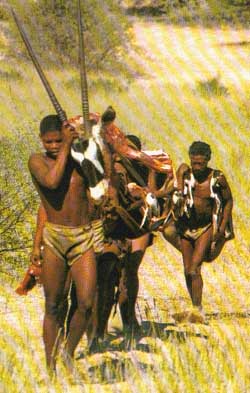 For the latest edition of the Four Stone Hearth, there will be a food theme, so I thought I'd post some issues/questions that I have regarding food and anthropology:
- To what extent did our ancestors eat a diet high in carbohydrates and sugar?
- What is the significance of this regarding the prevalence of diabetes today? and how does this relate to the population differences in diabetes?
- To what extent did marine foods contribute to our increase in brain size?
- What's the deal with mannose and other sugars that degrade once vegatables and fruits are ripped from their plants or from their roots, but are supposedly vitally important, and lacking in our diet?
- Does calorie restriction extend lifespan in humans? I don't think we'll know this "for sure" for several years.
- Is a high protein diet healthy for humans? Did our ancestors consume a high protein diet?
- What does the "optimal foraging strategy" consist of in today's modern environments? How might this differ between different SES levels and between different cultures?
Friday, November 17, 2006
Eye Color determined by a three SNP haplotype
Check out Dienekes' post on this new paper in AJHG. They find that eye color can be explained by a three SNP haplotype in OCA2, a gene that has been implicated in other pigmentary phenotypes as well.
Color and Ancestry in Brazil
From what I can understand, this study divides Brazilians into three "color" groups and then sees if their genomic ancestry as measured by 12 forensic markers predicts which color group they should fall in. They found a lot of overlap between the middle and extremes, but not between extremes. The number of markers is small. I'd like to see how they did their "physical evaluation" to determine who is white, intermediate, or black.
Hum Hered. 2006 Nov 10;62(4):190-195 [Epub ahead of print.]
Abstract: The population of Brazil, formed by extensive admixture between Amerindians, Europeans and Africans, is one of the most variable in the world. We have recently published a study that used ancestry-informative markers to conclude that in Brazil, at an individual level, color, as determined by physical evaluation, was a poor predictor of genomic ancestry, estimated by molecular markers. To corroborate these findings we undertook the present investigation based on data from 12 commercially available forensic microsatellites that were utilized to estimate the personal genomic origin for each of 752 individuals from the city of Sao Paulo, belonging to different Brazilian color categories (275 Whites, 192 Intermediates and 285 Blacks). The genotypes permitted the calculation of a personal likelihood-ratio estimator of African or European ancestry. Although the 12 marker set proved capable of discriminating between European and African individuals, we observed very significant overlaps among the three color categories of Brazilians. This was confirmed quantitatively using a Bayesian analysis of population structure that did not demonstrate significant genetic differentiation between the three color groups. These results corroborate and validate our previous conclusions using ancestry-informative markers that in Brazil at the individual level there is significant dissociation of color and genomic ancestry.
- Color and Genomic Ancestry in Brazilians: A Study with Forensic Microsatellites.
Pimenta JR, Zuccherato LW, Debes AA, Maselli L, Soares RP, Moura-Neto RS, Rocha J, Bydlowski SP, Pena SD.
Hum Hered. 2006 Nov 10;62(4):190-195 [Epub ahead of print.]
Abstract: The population of Brazil, formed by extensive admixture between Amerindians, Europeans and Africans, is one of the most variable in the world. We have recently published a study that used ancestry-informative markers to conclude that in Brazil, at an individual level, color, as determined by physical evaluation, was a poor predictor of genomic ancestry, estimated by molecular markers. To corroborate these findings we undertook the present investigation based on data from 12 commercially available forensic microsatellites that were utilized to estimate the personal genomic origin for each of 752 individuals from the city of Sao Paulo, belonging to different Brazilian color categories (275 Whites, 192 Intermediates and 285 Blacks). The genotypes permitted the calculation of a personal likelihood-ratio estimator of African or European ancestry. Although the 12 marker set proved capable of discriminating between European and African individuals, we observed very significant overlaps among the three color categories of Brazilians. This was confirmed quantitatively using a Bayesian analysis of population structure that did not demonstrate significant genetic differentiation between the three color groups. These results corroborate and validate our previous conclusions using ancestry-informative markers that in Brazil at the individual level there is significant dissociation of color and genomic ancestry.
Thursday, November 16, 2006
Neanderthal hoopla
I've been staying away from posting anything on the recent Neanderthal stuff, but I thought I'd give some props to the many posts at Gene Expression and Razib's Gene Expression.
In particular I like this post where Razib discusses the idea of "Ecotype persistence", then Chet Snicker's post showing an example of an ecotype in bears.
Check all these out, as well as John Hawks weblog.
In particular I like this post where Razib discusses the idea of "Ecotype persistence", then Chet Snicker's post showing an example of an ecotype in bears.
Check all these out, as well as John Hawks weblog.
Tuesday, November 14, 2006
Epigenetic modification through diet
Germ cells carry the epigenetic benefits of grandmother's diet
Craig Cooney
PNAS published online November 13, 2006
This is a commentary of a paper in PNAS about how mice fed differently (with methyl) during pregnancy can have offspring and grandoffspring with different coat color. "They find that this effect is inherited by the next generation, presumably through germ-line modifications during grandmaternal supplementation."
Then, from the last paragraph:
"In humans, the possibility even the likelihood, that grandmaternal diets contributed to the incidence of obesity and diabetes in the current generation and that today's dietary habits will have effects for generations to come make the work of Cropley et al. especially important."
Cropley JE, Suter CM, Beckman KB, Martin DIK (2006) PNAS USA 103:17308-17312
Craig Cooney
PNAS published online November 13, 2006
This is a commentary of a paper in PNAS about how mice fed differently (with methyl) during pregnancy can have offspring and grandoffspring with different coat color. "They find that this effect is inherited by the next generation, presumably through germ-line modifications during grandmaternal supplementation."
Then, from the last paragraph:
"In humans, the possibility even the likelihood, that grandmaternal diets contributed to the incidence of obesity and diabetes in the current generation and that today's dietary habits will have effects for generations to come make the work of Cropley et al. especially important."
Cropley JE, Suter CM, Beckman KB, Martin DIK (2006) PNAS USA 103:17308-17312
Monday, November 13, 2006
Genes underlying adaptation to hypoxia
Shriver MD, Mei R, Bigham A, Mao X, Brutsaert TD, Parra EJ, Moore LG.
Adv Exp Med Biol. 2006;588:89-100.
Abstract: The complete sequencing the human genome and recent analytical advances have provided the opportunity to perform genome-wide studies of human variation. There is substantial potential for such population-genomic approaches to assist efforts to uncover the historical and demographic histories of human populations. Additionally, these genome-wide datasets allow for investigations of variability among genomic regions. Although all genomic regions in a population have experienced the same demographic events, they have not been affected by these events in precisely the same way. Much of the variability among genomic regions is simply the result of genetic drift (i.e., gene frequency changes resulting from the effects of small breeding-population size), but some is also the result of genetic adaptation, which will only affect the gene under selection and nearby regions. We have used a new DNA typing assay that allows for the genotyping of thousands of SNPs on hundreds of samples to identify regions most likely to have been affected by genetic adaptation. Populations that have inhabited different niches (e.g., high-altitude regions) can be used to identify genes underlying the physiological differences. We have used two methods (admixture mapping and genome scans for genetic adaptation) founded on the population-genomic paradigms to search for genes underlying population differences in response to chronic hypoxia. There is great promise that together these methods will facilitate the discovery of genes influencing hypoxic response.
Friday, November 10, 2006
Human Gene Map for Performance and Health Related Phenotypes
This is always an interesting yearly paper to look at. It is a review of studies that have found associations between genetic variants and phenotypes such as endurance, muscle strength, training response, hemodynamic traits, insulin and glucose metabolism, fat distribution, blood lipid, exercise intolerance, Vo2max, and more ...
The Human Gene Map for Performance and Health-Related Fitness Phenotypes: The 2005 Update
TUOMO RANKINEN, MOLLY BRAY, JAMES HAGBERG, LOUIS PÉRUSSE, STEPHEN ROTH, BERND WOLFARTH, CLAUDE BOUCHARD
Medicine and Science in Sports & Exercise Volume 38, Number 11 (November 2006)
Abstract: The current review presents the 2005 update of the human gene map for physical performance and health-related fitness phenotypes. It is based on peer-reviewed papers published by the end of 2005. The genes and markers with evidence of association or linkage with a performance or fitness phenotype in sedentary or active people, in adaptation to acute exercise, or for training-induced changes are positioned on the genetic map of all autosomes and the X chromosome. Negative studies are reviewed, but a gene or locus must be supported by at least one positive study before being inserted on the map. By the end of 2000, in the early version of the gene map, 29 loci were depicted. In contrast, the 2005 human gene map for physical performance and health-related phenotypes includes 165 autosomal gene entries and QTL, plus five others on the X chromosome. Moreover, there are 17 mitochondrial genes in which sequence variants have been shown to influence relevant fitness and performance phenotypes. Thus, the map is growing in complexity. Unfortunately, progress is slow in the field of genetics of fitness and performance, primarily because the number of laboratories and scientists focused on the role of genes and sequence variations in exercise-related traits continues to be quite limited.
The Human Gene Map for Performance and Health-Related Fitness Phenotypes: The 2005 Update
TUOMO RANKINEN, MOLLY BRAY, JAMES HAGBERG, LOUIS PÉRUSSE, STEPHEN ROTH, BERND WOLFARTH, CLAUDE BOUCHARD
Medicine and Science in Sports & Exercise Volume 38, Number 11 (November 2006)
Abstract: The current review presents the 2005 update of the human gene map for physical performance and health-related fitness phenotypes. It is based on peer-reviewed papers published by the end of 2005. The genes and markers with evidence of association or linkage with a performance or fitness phenotype in sedentary or active people, in adaptation to acute exercise, or for training-induced changes are positioned on the genetic map of all autosomes and the X chromosome. Negative studies are reviewed, but a gene or locus must be supported by at least one positive study before being inserted on the map. By the end of 2000, in the early version of the gene map, 29 loci were depicted. In contrast, the 2005 human gene map for physical performance and health-related phenotypes includes 165 autosomal gene entries and QTL, plus five others on the X chromosome. Moreover, there are 17 mitochondrial genes in which sequence variants have been shown to influence relevant fitness and performance phenotypes. Thus, the map is growing in complexity. Unfortunately, progress is slow in the field of genetics of fitness and performance, primarily because the number of laboratories and scientists focused on the role of genes and sequence variations in exercise-related traits continues to be quite limited.
Thursday, November 09, 2006
Why do humans have white sclera?
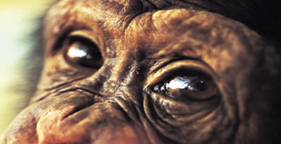 Here is a post from John Hawks about a paper that is coming out soon on how white sclera in humans may be an adaptation for communicating gaze direction. There is some experimental stuff here, comparing humans to other primates, so looks good.
Monday, November 06, 2006
Genes vs. environment in Afican American kidney function
Unfortunately, I don't have access to the full text, but this looks like an interesting study that attempts to disentangle the effects of genes and environment on physiology. Here, they seem to find that socioeconomic status plays a stronger role than genetics (as determined through genetic ancestry).
Peralta CA, Ziv E, Katz R, Reiner A, Burchard EG, Fried L, Kwok PY, Psaty B, Shlipak M.
J Am Soc Nephrol. 2006 Nov 2; [Epub ahead of print]
Abstract: Kidney disease is a major public health problem in the United States that affects African Americans disproportionately. The relative contribution of environmental and genetic factors to the increased burden of kidney disease among African Americans is unknown. The associations of genetic African ancestry and socioeconomic status with kidney function were studied cross-sectionally and longitudinally among 736 community-dwelling African Americans who were aged >65 yr and participating in the Cardiovascular Health Study. Genetic African ancestry was determined by genotyping 24 biallelic ancestry-informative markers and combining this information statistically to generate an estimate of ancestry for each individual. Kidney function was evaluated by cystatin C and estimated GFR (eGFR) using the Modification of Diet in Renal Disease equation. Longitudinal changes in serum creatinine and eGFR were estimated using baseline and follow-up values. In cross-sectional analyses, there was no association between genetic African ancestry and either measure of kidney function (P = 0.36 for cystatin C and 0.68 for eGFR). African ancestry was not associated with change in serum creatinine >/=0.05 mg/dl per yr (odds ratio [OR] 0.94; 95% confidence interval [CI] 0.83 to 1.06) or with change in eGFR >/=3 ml/min per 1.73 m(2) per yr (OR 1.02; 95% CI 0.92 to 1.13). In contrast, self reported African-American race was strongly associated with increased risk for kidney disease progression compared with white individuals for change in creatinine (OR 1.77; 95% CI 1.33 to 2.36) and for change in eGFR (OR 3.21; 95% CI 2.54 to 4.06). Among self-identified African Americans, low income (<$8000/yr) was strongly associated with prevalent kidney dysfunction by cystatin C >1.29 g/dl (adjusted OR 2.7; 95% CI 1.0 to 7.5) or by eGFR <60>$35,000/yr. Alleles that are known to be present more frequently in the African ancestral group were not associated with kidney dysfunction or kidney disease progression. Rather, kidney dysfunction in elderly African Americans seems more attributable to differences in environmental and social factors.
Peralta CA, Ziv E, Katz R, Reiner A, Burchard EG, Fried L, Kwok PY, Psaty B, Shlipak M.
J Am Soc Nephrol. 2006 Nov 2; [Epub ahead of print]
Abstract: Kidney disease is a major public health problem in the United States that affects African Americans disproportionately. The relative contribution of environmental and genetic factors to the increased burden of kidney disease among African Americans is unknown. The associations of genetic African ancestry and socioeconomic status with kidney function were studied cross-sectionally and longitudinally among 736 community-dwelling African Americans who were aged >65 yr and participating in the Cardiovascular Health Study. Genetic African ancestry was determined by genotyping 24 biallelic ancestry-informative markers and combining this information statistically to generate an estimate of ancestry for each individual. Kidney function was evaluated by cystatin C and estimated GFR (eGFR) using the Modification of Diet in Renal Disease equation. Longitudinal changes in serum creatinine and eGFR were estimated using baseline and follow-up values. In cross-sectional analyses, there was no association between genetic African ancestry and either measure of kidney function (P = 0.36 for cystatin C and 0.68 for eGFR). African ancestry was not associated with change in serum creatinine >/=0.05 mg/dl per yr (odds ratio [OR] 0.94; 95% confidence interval [CI] 0.83 to 1.06) or with change in eGFR >/=3 ml/min per 1.73 m(2) per yr (OR 1.02; 95% CI 0.92 to 1.13). In contrast, self reported African-American race was strongly associated with increased risk for kidney disease progression compared with white individuals for change in creatinine (OR 1.77; 95% CI 1.33 to 2.36) and for change in eGFR (OR 3.21; 95% CI 2.54 to 4.06). Among self-identified African Americans, low income (<$8000/yr) was strongly associated with prevalent kidney dysfunction by cystatin C >1.29 g/dl (adjusted OR 2.7; 95% CI 1.0 to 7.5) or by eGFR <60>$35,000/yr. Alleles that are known to be present more frequently in the African ancestral group were not associated with kidney dysfunction or kidney disease progression. Rather, kidney dysfunction in elderly African Americans seems more attributable to differences in environmental and social factors.
Friday, November 03, 2006
Noncoding sequences and fast brain evolution in humans
Accelerated Evolution of Conserved Noncoding Sequences in Humans
Shyam Prabhakar, James P. Noonan, Svante Pääbo, Edward M. Rubin
Science: 3 November 2006:Vol. 314. no. 5800, p. 786
Abstract: Changes in gene regulation likely influenced the profound phenotypic divergence of humans from other mammals, but the extent of adaptive substitution in human regulatory sequences remains unknown. We identified 992 conserved noncoding sequences (CNSs) with a significant excess of human-specific substitutions. These accelerated elements were disproportionately found near genes involved in neuronal cell adhesion. To assess the uniqueness of human noncoding evolution, we examined CNSs accelerated in chimpanzee and mouse. Although we observed a similar enrichment near neuronal adhesion genes in chimpanzee, the accelerated CNSs themselves exhibited almost no overlap with those in human, suggesting independent evolution toward different neuronal phenotypes in each species. CNSs accelerated in mouse showed no bias toward neuronal cell adhesion. Our results indicate that widespread cis-regulatory changes in human evolution may have contributed to uniquely human features of brain development and function.
Shyam Prabhakar, James P. Noonan, Svante Pääbo, Edward M. Rubin
Science: 3 November 2006:Vol. 314. no. 5800, p. 786
Abstract: Changes in gene regulation likely influenced the profound phenotypic divergence of humans from other mammals, but the extent of adaptive substitution in human regulatory sequences remains unknown. We identified 992 conserved noncoding sequences (CNSs) with a significant excess of human-specific substitutions. These accelerated elements were disproportionately found near genes involved in neuronal cell adhesion. To assess the uniqueness of human noncoding evolution, we examined CNSs accelerated in chimpanzee and mouse. Although we observed a similar enrichment near neuronal adhesion genes in chimpanzee, the accelerated CNSs themselves exhibited almost no overlap with those in human, suggesting independent evolution toward different neuronal phenotypes in each species. CNSs accelerated in mouse showed no bias toward neuronal cell adhesion. Our results indicate that widespread cis-regulatory changes in human evolution may have contributed to uniquely human features of brain development and function.
Wednesday, November 01, 2006
Do "good gene" dads make "good gene" offspring
Good genes sexual selection in nature
John A. Byers, and Lisette Waits
PNAS October 31, 2006 vol. 103 no. 44 16343-16345
Abstract: Whether the mate sampling and choice performed by females in nature influences offspring performance is a controversial issue in theory and an open empirical question. Pronghorn (Antilocapra americana) females engage in an obvious and energetically expensive mate sampling process to identify vigorous males. Although individual females sample independently, their choices converge on a small proportion of males that sire most young. Offspring of attractive males were more likely to survive to weaning and to age classes as late as 5 years, resulting in a selection differential, calculated by expected differences in lifetime number of offspring weaned, of 0.32 against random mating. Enhanced survival to weaning appeared to be accomplished by faster growth rates. Females compensated for matings with a less attractive mate by elevating rates of milk delivery to their young. Because pronghorn males do not have costly ornaments, we conclude that female choice for good genes can exist in the absence of ornaments. Furthermore, female choice may be important and unrecognized as a force that can lower population genetic load.
John A. Byers, and Lisette Waits
PNAS October 31, 2006 vol. 103 no. 44 16343-16345
Abstract: Whether the mate sampling and choice performed by females in nature influences offspring performance is a controversial issue in theory and an open empirical question. Pronghorn (Antilocapra americana) females engage in an obvious and energetically expensive mate sampling process to identify vigorous males. Although individual females sample independently, their choices converge on a small proportion of males that sire most young. Offspring of attractive males were more likely to survive to weaning and to age classes as late as 5 years, resulting in a selection differential, calculated by expected differences in lifetime number of offspring weaned, of 0.32 against random mating. Enhanced survival to weaning appeared to be accomplished by faster growth rates. Females compensated for matings with a less attractive mate by elevating rates of milk delivery to their young. Because pronghorn males do not have costly ornaments, we conclude that female choice for good genes can exist in the absence of ornaments. Furthermore, female choice may be important and unrecognized as a force that can lower population genetic load.
Directional, then stabilizing selection on brain size
Nothing too surprising here, I don't think:
The dynamics of Machiavellian intelligence
Sergey Gavrilets and Aaron Vose
PNAS Published online before print October 30, 2006
Abstract: The "Machiavellian intelligence" hypothesis (or the "social brain" hypothesis) posits that large brains and distinctive cognitive abilities of humans have evolved via intense social competition in which social competitors developed increasingly sophisticated "Machiavellian" strategies as a means to achieve higher social and reproductive success. Here we build a mathematical model aiming to explore this hypothesis. In the model, genes control brains which invent and learn strategies (memes) which are used by males to gain advantage in competition for mates. We show that the dynamics of intelligence has three distinct phases. During the dormant phase only newly invented memes are present in the population. During the cognitive explosion phase the population’s meme count and the learning ability, cerebral capacity (controlling the number of different memes that the brain can learn and use), and Machiavellian fitness of individuals increase in a runaway fashion. During the saturation phase natural selection resulting from the costs of having large brains checks further increases in cognitive abilities. Overall, our results suggest that the mechanisms underlying the "Machiavellian intelligence" hypothesis can indeed result in the evolution of significant cognitive abilities on the time scale of 10 to 20 thousand generations. We show that cerebral capacity evolves faster and to a larger degree than learning ability. Our model suggests that there may be a tendency toward a reduction in cognitive abilities (driven by the costs of having a large brain) as the reproductive advantage of having a large brain decreases and the exposure to memes increases in modern societies.
The dynamics of Machiavellian intelligence
Sergey Gavrilets and Aaron Vose
PNAS Published online before print October 30, 2006
Abstract: The "Machiavellian intelligence" hypothesis (or the "social brain" hypothesis) posits that large brains and distinctive cognitive abilities of humans have evolved via intense social competition in which social competitors developed increasingly sophisticated "Machiavellian" strategies as a means to achieve higher social and reproductive success. Here we build a mathematical model aiming to explore this hypothesis. In the model, genes control brains which invent and learn strategies (memes) which are used by males to gain advantage in competition for mates. We show that the dynamics of intelligence has three distinct phases. During the dormant phase only newly invented memes are present in the population. During the cognitive explosion phase the population’s meme count and the learning ability, cerebral capacity (controlling the number of different memes that the brain can learn and use), and Machiavellian fitness of individuals increase in a runaway fashion. During the saturation phase natural selection resulting from the costs of having large brains checks further increases in cognitive abilities. Overall, our results suggest that the mechanisms underlying the "Machiavellian intelligence" hypothesis can indeed result in the evolution of significant cognitive abilities on the time scale of 10 to 20 thousand generations. We show that cerebral capacity evolves faster and to a larger degree than learning ability. Our model suggests that there may be a tendency toward a reduction in cognitive abilities (driven by the costs of having a large brain) as the reproductive advantage of having a large brain decreases and the exposure to memes increases in modern societies.
Subscribe to:
Posts (Atom)