Here is the link to the commentary paper where Jobling and Balaresque assert that 70% of modern human populations practice patrilocality, a figure that I've seen disputed at least once.
Tuesday, January 09, 2007
Mating structure in the genes
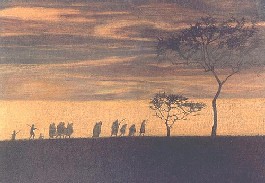
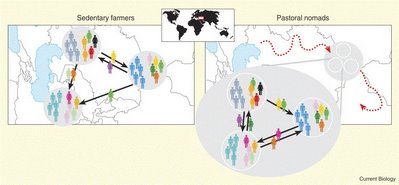
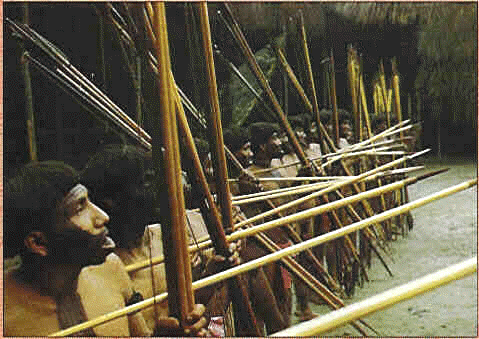
Regarding the previous post on matrilocality, this paper examined differences in mtDNA and Y-chromosome diversity between Central Asian farmers (who are organized into nuclear families and practice endogamy, although the picture below shows exogamy) and pastoral populations (who are organized into lineages and practice exogamy). They don't find much difference in mtDNA diversity, but find less Y-chromosome diversity among the pastoral than the farming populations. They also find that the Uzbek groups who converted to a farming way of life about 20 generations ago show similar patterns of Y-chromosome diversity to the other farmers, indicating that "a molecular signature in Y-chromosome diversity is short-lived and can disappear within a few centuries after the disintegration of descent groups."
 Here is the link to the commentary paper where Jobling and Balaresque assert that 70% of modern human populations practice patrilocality, a figure that I've seen disputed at least once.
Here is the link to the commentary paper where Jobling and Balaresque assert that 70% of modern human populations practice patrilocality, a figure that I've seen disputed at least once.


Monday, January 08, 2007
Genetics of matrilocality, patrilocality
There is also an accompanying commentary paper by Jobling of the paper below. I haven't read either yet, but will post more on this soon.
From Social to Genetic Structures in Central Asia
Current Biology, Vol 17, 43-48, 09 January 2007
Raphaëlle Chaix, Lluís Quintana-Murci, Tatyana Hegay, Michael F. Hammer, Zahra Mobasher, Frédéric Austerlitz, and Evelyne Heyer
Abstract: Pastoral and farmer populations, who have coexisted in Central Asia since the fourth millennium B.C. [1], present not only different lifestyles and means of subsistence but also various types of social organization. Pastoral populations are organized into so-called descent groups (tribes, clans, and lineages) and practice exogamous marriages (a man chooses a bride in a different lineage or clan). In Central Asia, these descent groups are patrilineal: The children are systematically affiliated with the descent groups of the father. By contrast, farmer populations are organized into families (extended or nuclear) and often establish endogamous marriages with cousins [2, 3, 4]. This study aims at better understanding the impact of these differences in lifestyle and social organization on the shaping of genetic diversity. We show that pastoral populations exhibit a substantial loss of Y chromosome diversity in comparison to farmers but that no such a difference is observed at the mitochondrial-DNA level. Our analyses indicate that the dynamics of patrilineal descent groups, which implies different male and female sociodemographic histories, is responsible for these sexually-asymmetric genetic patterns. This molecular signature of the pastoral social organization disappears over a few centuries only after conversion to an agricultural way of life.
From Social to Genetic Structures in Central Asia
Current Biology, Vol 17, 43-48, 09 January 2007
Raphaëlle Chaix, Lluís Quintana-Murci, Tatyana Hegay, Michael F. Hammer, Zahra Mobasher, Frédéric Austerlitz, and Evelyne Heyer
Abstract: Pastoral and farmer populations, who have coexisted in Central Asia since the fourth millennium B.C. [1], present not only different lifestyles and means of subsistence but also various types of social organization. Pastoral populations are organized into so-called descent groups (tribes, clans, and lineages) and practice exogamous marriages (a man chooses a bride in a different lineage or clan). In Central Asia, these descent groups are patrilineal: The children are systematically affiliated with the descent groups of the father. By contrast, farmer populations are organized into families (extended or nuclear) and often establish endogamous marriages with cousins [2, 3, 4]. This study aims at better understanding the impact of these differences in lifestyle and social organization on the shaping of genetic diversity. We show that pastoral populations exhibit a substantial loss of Y chromosome diversity in comparison to farmers but that no such a difference is observed at the mitochondrial-DNA level. Our analyses indicate that the dynamics of patrilineal descent groups, which implies different male and female sociodemographic histories, is responsible for these sexually-asymmetric genetic patterns. This molecular signature of the pastoral social organization disappears over a few centuries only after conversion to an agricultural way of life.
Sunday, January 07, 2007
Differences in gene expression between populations
Check out p-ter's post at Gene Expression on a new paper out in Nature Genetics that compares gene expression levels between Asians and Europeans from the HapMap cell lines. As p-ter mentions, it is puzzling why they didn't include the African sample. The paper contains a list of the genes for which expression differed the most -- none were very notable to me.
Friday, January 05, 2007
Asthma: Population differences?
Barnes KC, Grant AV, Hansel NN, Gao P, Dunston GM.
Proc Am Thorac Soc. 2007;4(1):58-68
Abstract: It has been well established that genetic factors strongly affect susceptibility to asthma and its associated traits. It is less clear to what extent genetic variation contributes to the ethnic disparities observed for asthma morbidity and mortality. Individuals of African descent with asthma have more severe asthma, higher IgE levels, a higher degree of steroid dependency, and more severe clinical symptoms than individuals of European descent with asthma but relatively few studies have focused on this particularly vulnerable ethnic group. Similar underrepresentation exists for other minorities, including Hispanics. In this review, a summary of linkage and association studies in populations of African descent is presented, and the role of linkage disequilibrium in the dissection of a complex trait such as asthma is discussed. Consideration for the impact of population stratification in recently admixed populations (i.e., European, African) is essential in genetic association studies focusing on African ancestry groups. With the most recent update on the International HapMap Project, efficient selection of haplotype tagging single nucleotide polymorphisms (htSNPs) for African Americans has accelerated and efficiency of htSNPs chosen from one population to represent other continental groups (e.g., African) has been demonstrated. Cutting-edge approaches, such as genomewide association studies, admixture mapping, and phylogenetic analyses, offer new opportunities for dissecting the genetic basis for asthma in populations of African descent.
Proc Am Thorac Soc. 2007;4(1):58-68
Abstract: It has been well established that genetic factors strongly affect susceptibility to asthma and its associated traits. It is less clear to what extent genetic variation contributes to the ethnic disparities observed for asthma morbidity and mortality. Individuals of African descent with asthma have more severe asthma, higher IgE levels, a higher degree of steroid dependency, and more severe clinical symptoms than individuals of European descent with asthma but relatively few studies have focused on this particularly vulnerable ethnic group. Similar underrepresentation exists for other minorities, including Hispanics. In this review, a summary of linkage and association studies in populations of African descent is presented, and the role of linkage disequilibrium in the dissection of a complex trait such as asthma is discussed. Consideration for the impact of population stratification in recently admixed populations (i.e., European, African) is essential in genetic association studies focusing on African ancestry groups. With the most recent update on the International HapMap Project, efficient selection of haplotype tagging single nucleotide polymorphisms (htSNPs) for African Americans has accelerated and efficiency of htSNPs chosen from one population to represent other continental groups (e.g., African) has been demonstrated. Cutting-edge approaches, such as genomewide association studies, admixture mapping, and phylogenetic analyses, offer new opportunities for dissecting the genetic basis for asthma in populations of African descent.
Thursday, January 04, 2007
Marathon mice
A new paper is out where transgenic mice that over-express PGC1alpha exhibit greater endurance capacity. Science Blog link
It would be interesting to examine variation of this gene between humans and other primates and between human populations.
endurance running - important human adaptation ??
other genes related to running (with links):
in mice - PPAR
in humans - ACTN3
It would be interesting to examine variation of this gene between humans and other primates and between human populations.
endurance running - important human adaptation ??
other genes related to running (with links):
in mice - PPAR
in humans - ACTN3
Wednesday, January 03, 2007
East African mtDNA
their main selling points: whole mtDNA genome sequencing, and more East African population samples...their conclusion: they confirm the role of East African populations (especially around Tanzania?) in the origin and spread of humans to the rest of Africa and the world.
Whole mtDNA Genome Sequence Analysis of Ancient African Lineages
Mary Katherine Gonder, Holly M. Mortensen, Floyd A. Reed, Alexandra de Sousa and Sarah A. Tishkoff
Molecular Biology and Evolution Accepted for publication December 12, 2006. Abstract: Studies of human mtDNA genomes demonstrate that the root of the human phylogenetic tree occurs in Africa. Although two mtDNA lineages with an African origin (haplogroups M and N) were the progenitors of all non-African haplogroups, macrohaplogroup L (including haplogroups L0-L6) is limited to sub-Saharan Africa. Several L haplogroup lineages occur most frequently in eastern Africa (e.g., L0a, L0f, L5, L3g), but some are specific to certain ethnic groups, such as haplogroup lineages L0d and L0k that previously have been found nearly exclusively among southern African "click" speakers. Few studies have included multiple mtDNA genome samples belonging to haplogroups that occur in eastern and southern Africa but are rare or absent elsewhere. This lack of sampling in eastern Africa makes it difficult to infer relationships among mtDNA haplogroups or to examine events that occurred early in human history. We sequenced 62 complete mtDNA genomes of ethnically diverse Tanzanians, southern African Khoisan speakers and Bakola Pygmies and compared them to a global pool of 226 mtDNA genomes. From these, we infer phylogenetic relationships amongst mtDNA haplogroups and estimate the time to most recent common ancestor (TMRCA) for haplogroup lineages. These data suggest that Tanzanians have high genetic diversity and possess ancient mtDNA haplogroups, some of which are either rare (L0d and L5) or absent (L0f) in other regions of Africa. We propose that a large and diverse human population(s) has persisted in eastern Africa and that eastern Africa may have been an ancient source of dispersion of modern humans both within and outside of Africa.
Whole mtDNA Genome Sequence Analysis of Ancient African Lineages
Mary Katherine Gonder, Holly M. Mortensen, Floyd A. Reed, Alexandra de Sousa and Sarah A. Tishkoff
Molecular Biology and Evolution Accepted for publication December 12, 2006. Abstract: Studies of human mtDNA genomes demonstrate that the root of the human phylogenetic tree occurs in Africa. Although two mtDNA lineages with an African origin (haplogroups M and N) were the progenitors of all non-African haplogroups, macrohaplogroup L (including haplogroups L0-L6) is limited to sub-Saharan Africa. Several L haplogroup lineages occur most frequently in eastern Africa (e.g., L0a, L0f, L5, L3g), but some are specific to certain ethnic groups, such as haplogroup lineages L0d and L0k that previously have been found nearly exclusively among southern African "click" speakers. Few studies have included multiple mtDNA genome samples belonging to haplogroups that occur in eastern and southern Africa but are rare or absent elsewhere. This lack of sampling in eastern Africa makes it difficult to infer relationships among mtDNA haplogroups or to examine events that occurred early in human history. We sequenced 62 complete mtDNA genomes of ethnically diverse Tanzanians, southern African Khoisan speakers and Bakola Pygmies and compared them to a global pool of 226 mtDNA genomes. From these, we infer phylogenetic relationships amongst mtDNA haplogroups and estimate the time to most recent common ancestor (TMRCA) for haplogroup lineages. These data suggest that Tanzanians have high genetic diversity and possess ancient mtDNA haplogroups, some of which are either rare (L0d and L5) or absent (L0f) in other regions of Africa. We propose that a large and diverse human population(s) has persisted in eastern Africa and that eastern Africa may have been an ancient source of dispersion of modern humans both within and outside of Africa.
Tuesday, January 02, 2007
A consensus on the evolution of hominid diets?
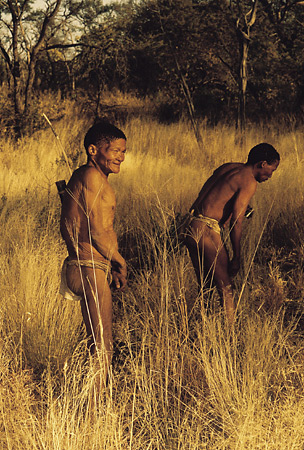 What I've been looking for!! (kind of). This review by John Shea of a conference (in the latest issue of Evolutionary Anthropology) held this past May at The Max Planck Institute for Evolutionary Anthropology. It was entitled "The Evolution of Hominid Diets: Integrating Approaches to the Study of Paleolithic Subsistence".
Some of the more interesting tidbits:
"Inception of Meat-Eating":
Evidence from the earliest Homo fossils from 2.5 Mya, indicating a mixed woodland/savanna habitat, suggesting many "opportunities for hunting and scavenging" along with evidence of reduction in molar size, and encephalization "underwritten by higher qualtiy diets"... also some biogeochemical evidence of increased meat eating in Homo.
Scavenging versus Hunting:
Not much here, except a consensus that there was "complex variation in subsistence strategies"
 Resource Intensification:
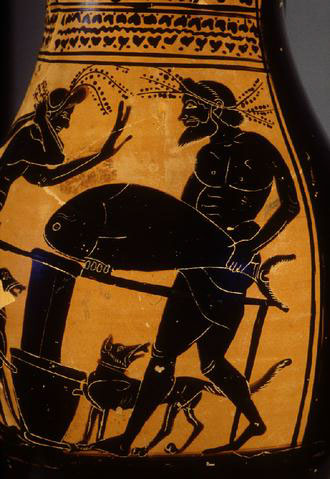
"The Upper Paleolithic subsistence strategy dealt with high risks and costs by reduced residential mobility, increased investment in technology, and broader prey spectra, particularly the in-bulk collection of what would otherwise be low-ranked resources (for example, birds, fish and shellfish)."
Mismatches among lines of evidence: projectiles and fishing:
projectiles: who knows?
fish: "fish are a major source of long-chain fatty acids essential to brain growth", and fishing evidence appears in Upper Paleolithic Homo sapiens, but not Neanderthals.
check out this Max Planck website for more information, including names of participants and abstracts.
Using PCA instead of STRUCTURE
This paper is pretty technical and most of it flew over my head but this paragraph puts it into perspective:
"We can only uncover structure in the samples being analyzed. As pointed out in [39], the sampling strategy can affect the apparent structure. Rosenberg et al. [29] give a detailed discussion of the issue, and of the question of whether clines or clusters are a better description of human genetic variation. However, our “axes of variation” are likely to be relatively robust to this cline/cluster controversy. If there is a genetic cline running across a continent, and we sample two populations at the extremes, then it will appear to the analyst that the two populations form two discrete clusters. However, if the sampling strategy had been more geographically uniform, the cline would be apparent. Nevertheless, the eigenvector reflecting the cline could be expected to be very similar in both cases."
Population Structure and Eigenanalysis
Nick Patterson, Alkes L. Price, David Reich
PLoS Genetics December 2006, 2(12)
Abstract: Current methods for inferring population structure from genetic data do not provide formal significance tests for population differentiation. We discuss an approach to studying population structure (principal components analysis) that was first applied to genetic data by Cavalli-Sforza and colleagues. We place the method on a solid statistical footing, using results from modern statistics to develop formal significance tests. We also uncover a general “phase change” phenomenon about the ability to detect structure in genetic data, which emerges from the statistical theory we use, and has an important implication for the ability to discover structure in genetic data: for a fixed but large dataset size, divergence between two populations (as measured, for example, by a statistic like FST) below a threshold is essentially undetectable, but a little above threshold, detection will be easy. This means that we can predict the dataset size needed to detect structure.
"We can only uncover structure in the samples being analyzed. As pointed out in [39], the sampling strategy can affect the apparent structure. Rosenberg et al. [29] give a detailed discussion of the issue, and of the question of whether clines or clusters are a better description of human genetic variation. However, our “axes of variation” are likely to be relatively robust to this cline/cluster controversy. If there is a genetic cline running across a continent, and we sample two populations at the extremes, then it will appear to the analyst that the two populations form two discrete clusters. However, if the sampling strategy had been more geographically uniform, the cline would be apparent. Nevertheless, the eigenvector reflecting the cline could be expected to be very similar in both cases."
Population Structure and Eigenanalysis
Nick Patterson, Alkes L. Price, David Reich
PLoS Genetics December 2006, 2(12)
Abstract: Current methods for inferring population structure from genetic data do not provide formal significance tests for population differentiation. We discuss an approach to studying population structure (principal components analysis) that was first applied to genetic data by Cavalli-Sforza and colleagues. We place the method on a solid statistical footing, using results from modern statistics to develop formal significance tests. We also uncover a general “phase change” phenomenon about the ability to detect structure in genetic data, which emerges from the statistical theory we use, and has an important implication for the ability to discover structure in genetic data: for a fixed but large dataset size, divergence between two populations (as measured, for example, by a statistic like FST) below a threshold is essentially undetectable, but a little above threshold, detection will be easy. This means that we can predict the dataset size needed to detect structure.
Population differences in allograft failure
- Disparate Distribution of 16 Candidate Single Nucleotide Polymorphisms Among Racial and Ethnic Groups of Pediatric Heart Transplant Patients.
Girnita DM, Webber SA, Ferrell R, Burckart GJ, Brooks MM, McDade KK, Chinnock R, Canter C, Addonizio L, Bernstein D, Kirklin JK, Girnita AL, Zeevi A.
BACKGROUND.: Allograft failure in African-Americans remains higher than in Caucasians. Single nucleotide polymorphisms (SNPs) have been associated with altered allograft outcomes. METHODS.: In this multi-center study we compared SNP frequencies in 364 pediatric heart recipients from three ethnic/racial groups: Caucasian (n=243), African-American (n=39), and Hispanic (n=82). The target genes were: tumor necrosis factor-alpha, interleukin (IL)-10, IL-6, interferon (IFN)-gamma, vascular endothelial growth factor (VEGF), transforming growth factor-beta1, Fas, FasL, granzyme B, ABCB1, CYP3A5. RESULTS.: Compared to Caucasians, African-Americans exhibited a higher prevalence of genotypes associated with low expression of IFN-gamma (24% vs. 45.7%, P<0.001) and IL-10 (33% vs. 57.1%, P=0.052). African-Americans also exhibited an increased prevalence of high IL-6 (82.9% vs. 38.1%; P<0.001). VEGF -2578 C/C and -460 C/C genotypes were found more frequently in African-Americans and Hispanics as compared to Caucasians (P<0.001). G/G genotype of Fas and T/T genotype of FasL were expressed more often by African-American recipients. The prevalence of Granzyme B (-295A/G) genotype was differentially distributed in the three groups. Compared with Caucasians, African-Americans were twice as likely to carry the ABCB1 2677 G/G genotype (78.6% vs. 33.7%, P<0.0025), and they were more frequent carriers of the CYP3A5 *1/*1 genotype (35.7% vs. 0.6% in Caucasians and 7.2% in Hispanics; P<0.001). CONCLUSION.: African-Americans have a genetic background that may predispose to proinflammatory/lower regulatory environment, reduced drug exposure and immunosuppressive efficacy. In this ongoing multicenter study, these gene polymorphisms differences among ethnic/racial groups are being documented so that therapeutic strategies can be devised to optimize outcomes for pediatric transplant recipients.
Monday, January 01, 2007
Genetics of Obesity
 In this review of the genetics of obesity, the authors review the genetics of monogenic obesity, syndromic obesity, and polygenic obesity. The gist is that some progress has been made but we will have to mainly focus more on GxE interactions and this will be immensely complex as the picture on the left shows. I'm not sure if they mentioned population-based approaches but it would seem that that would hold some promise.
Unraveling the Genetics of Human Obesity
David M. Mutch, Karine Clément
PLoS Genetics December 2006, v. 2(12)
Abstract: The use of modern molecular biology tools in deciphering the perturbed biochemistry and physiology underlying the obese state has proven invaluable. Identifying the hypothalamic leptin/melanocortin pathway as critical in many cases of monogenic obesity has permitted targeted, hypothesis-driven experiments to be performed, and has implicated new candidates as causative for previously uncharacterized clinical cases of obesity. Meanwhile, the effects of mutations in the melanocortin-4 receptor gene, for which the obese phenotype varies in the degree of severity among individuals, are now thought to be influenced by one's environmental surroundings. Molecular approaches have revealed that syndromes (Prader-Willi and Bardet-Biedl) previously assumed to be controlled by a single gene are, conversely, regulated by multiple elements. Finally, the application of comprehensive profiling technologies coupled with creative statistical analyses has revealed that interactions between genetic and environmental factors are responsible for the common obesity currently challenging many Westernized societies. As such, an improved understanding of the different “types” of obesity not only permits the development of potential therapies, but also proposes novel and often unexpected directions in deciphering the dysfunctional state of obesity.
Wednesday, December 27, 2006
Iran, oil and nuclear energy (or weapons?)
I thought it was interesting that a paper like this showed up in PNAS. Basically, maybe Iran's intentions really are good. (the paper is open access, so see link)
The Iranian petroleum crisis and United States national security
Roger Stern
PNAS Early Edition
Abstract: The U.S. case against Iran is based on Iran's deceptions regarding nuclear weapons development. This case is buttressed by assertions that a state so petroleum-rich cannot need nuclear power to preserve exports, as Iran claims. The U.S. infers, therefore, that Iran's entire nuclear technology program must pertain to weapons development. However, some industry analysts project an Irani oil export decline [e.g., Clark JR (2005) Oil Gas J 103(18):34-39]. If such a decline is occurring, Iran's claim to need nuclear power could be genuine. Because Iran's government relies on monopoly proceeds from oil exports for most revenue, it could become politically vulnerable if exports decline. Here, we survey the political economy of Irani petroleum for evidence of this decline. We define Iran's export decline rate (edr) as its summed rates of depletion and domestic demand growth, which we find equals 10-12%. We estimate marginal cost per barrel for additions to Irani production capacity, from which we derive the "standstill" investment required to offset edr. We then compare the standstill investment to actual investment, which has been inadequate to offset edr. Even if a relatively optimistic schedule of future capacity addition is met, the ratio of 2011 to 2006 exports will be only 0.40-0.52. A more probable scenario is that, absent some change in Irani policy, this ratio will be 0.33-0.46 with exports declining to zero by 2014-2015. Energy subsidies, hostility to foreign investment, and inefficiencies of its state-planned economy underlie Iran's problem, which has no relation to "peak oil."
The Iranian petroleum crisis and United States national security
Roger Stern
PNAS Early Edition
Abstract: The U.S. case against Iran is based on Iran's deceptions regarding nuclear weapons development. This case is buttressed by assertions that a state so petroleum-rich cannot need nuclear power to preserve exports, as Iran claims. The U.S. infers, therefore, that Iran's entire nuclear technology program must pertain to weapons development. However, some industry analysts project an Irani oil export decline [e.g., Clark JR (2005) Oil Gas J 103(18):34-39]. If such a decline is occurring, Iran's claim to need nuclear power could be genuine. Because Iran's government relies on monopoly proceeds from oil exports for most revenue, it could become politically vulnerable if exports decline. Here, we survey the political economy of Irani petroleum for evidence of this decline. We define Iran's export decline rate (edr) as its summed rates of depletion and domestic demand growth, which we find equals 10-12%. We estimate marginal cost per barrel for additions to Irani production capacity, from which we derive the "standstill" investment required to offset edr. We then compare the standstill investment to actual investment, which has been inadequate to offset edr. Even if a relatively optimistic schedule of future capacity addition is met, the ratio of 2011 to 2006 exports will be only 0.40-0.52. A more probable scenario is that, absent some change in Irani policy, this ratio will be 0.33-0.46 with exports declining to zero by 2014-2015. Energy subsidies, hostility to foreign investment, and inefficiencies of its state-planned economy underlie Iran's problem, which has no relation to "peak oil."
Saturday, December 23, 2006
Science breakthroughs of the year and areas to watch in 2007
The #1 breakthrough according to Science was the proof of the Poincare conjecture. The runners-up are, in order: (see here for all the relevant pubs)
- Sequencing of Neanderthal autosomal DNA
- The worlds two great ice sheets losing ice to the oceans, at an accelerating pace
- Discovery of a fossil of a fish/amphibian.. "missing link" between water and land dwellers
- Cloaking technology: playing around with optics
- advances in understanding and treating age-related macular degeneration
- genetics of biodiversity and speciation
- new microscopy technology that gives clearer view of cells and proteins.
- the role of long-term potentiation in the formation of memory.
- the discovery of piRNAs, another class of small RNA molecules.
Areas to watch in 2007.
I won't list them all here, but obviously more genetic stuff (including whole genome association studies), and global warming.
Also in this issue of Science is a profile of Bruce Lahn. Check out GNXP on this.
- Sequencing of Neanderthal autosomal DNA
- The worlds two great ice sheets losing ice to the oceans, at an accelerating pace
- Discovery of a fossil of a fish/amphibian.. "missing link" between water and land dwellers
- Cloaking technology: playing around with optics
- advances in understanding and treating age-related macular degeneration
- genetics of biodiversity and speciation
- new microscopy technology that gives clearer view of cells and proteins.
- the role of long-term potentiation in the formation of memory.
- the discovery of piRNAs, another class of small RNA molecules.
Areas to watch in 2007.
I won't list them all here, but obviously more genetic stuff (including whole genome association studies), and global warming.
Also in this issue of Science is a profile of Bruce Lahn. Check out GNXP on this.
Friday, December 22, 2006
Elevated ethnocentrism in the first trimester of pregnancy
This paper seemed really cool at first glance but then I was disappointed when I read it. It basiacally supports the hypothesis that during the first trimester of pregnancy in-group favoritism is at the most heightened state of the whole pregnancy because this is when the mother's immune system is on its highest alert.
The major thing that I did not like about it was that the title says ethnocentrism but then the research looks at American vs. non-American, so not so much at ethnicity, per se, after all.
Elevated ethnocentrism in the first trimester of pregnancy
Carlos David Navarrete, Daniel M.T. Fessler and Serena J. Eng
Evolution and Human Behavior Volume 28, Issue 1 , January 2007, Pages 60-65
Abstract: Recent research employing a disease-threat model of the psychology of intergroup attitudes has provided preliminary support for a link between subjectively disease-salient emotional states and ethnocentric attitudes. Because the first trimester of pregnancy is a period of particular vulnerability to infection, pregnant women offer an opportunity to further test this association. We explored the expression of intergroup attitudes in a sample of pregnant women from the United States. Consistent with the predictions of the disease-threat model, results from our cross-sectional study indicate that favoritism toward the ingroup peaks during the first trimester of pregnancy and decreases during the second and third trimesters. We discuss this finding in light of the possible contributions of cultural and biological factors affecting ethnocentrism.
The major thing that I did not like about it was that the title says ethnocentrism but then the research looks at American vs. non-American, so not so much at ethnicity, per se, after all.
Elevated ethnocentrism in the first trimester of pregnancy
Carlos David Navarrete, Daniel M.T. Fessler and Serena J. Eng
Evolution and Human Behavior Volume 28, Issue 1 , January 2007, Pages 60-65
Abstract: Recent research employing a disease-threat model of the psychology of intergroup attitudes has provided preliminary support for a link between subjectively disease-salient emotional states and ethnocentric attitudes. Because the first trimester of pregnancy is a period of particular vulnerability to infection, pregnant women offer an opportunity to further test this association. We explored the expression of intergroup attitudes in a sample of pregnant women from the United States. Consistent with the predictions of the disease-threat model, results from our cross-sectional study indicate that favoritism toward the ingroup peaks during the first trimester of pregnancy and decreases during the second and third trimesters. We discuss this finding in light of the possible contributions of cultural and biological factors affecting ethnocentrism.
Wednesday, December 20, 2006
CNVs and human-chimp differences
Evolgen has covered the recent papers on CNVs and he has another one up about how CNVs might help us explain phenotypic differences between chimpanzees and humans. There is a paper by Hahn that will be coming out soon in PLoS One. This journal has still not published its first issue.
Tuesday, December 19, 2006
Samuel Bowles on group competition and relatedness as important factors in human cooperation
I thought I would go over some more of the details of this paper by Samuel Bowles in Science. I had briefly covered it in a recent post. The paper hasn't gotten as much coverage as I think it deserves so I'll try to spread the meme here.
My understanding of it, in a (long) sentence is that using the Price Equation for the evolution of altruism which takes into account the balance of a within-deme and between deme effect, and some estimates of group competition and within-group relatedness among modern hunter-gatherers, S. Bowles argues that with group competition and group relatedness being high enough (and he provides evidence that it may indeed have been) and with reproductive leveling due to monogamy (thereby reducing the amount of intra-group competition), human large scale cooperation can flourish.
Ok, that was a long sentence. Maybe a shorter way of saying this is that cooperation in humans is largely due to the relatedness of people within groups, along with the fact that conflict between groups was frequent enough and that reproductive leveling (monogamy) offset any possibility that within-group competition would increase too much.
Some questions:
Is it safe to make the assumption that the extent of group warfare we see in today's hunter-gatherers closely approximates what it was for most of our hominin evolution? - not so sure about that. Bowles actually notes that "even very infrequent contests would have been sufficient to spread quite costly forms of altruism. He also thinks that recurrent warfare would explain the frequent catastrophic mortality and very slow growth rates seen in human demographic history.
Is it safe to assume that levels of relatedness among individuals in groups was the same now in hunter-gatherers as it was for most of our hominin evolution? - I'm not very clear on how/where S. Bowles gets his data for relatedness among the hunter-gatherer groups and also why if they are so surprisingly high (just under that for cousins) no one else would have noticed this before.
I have always had a strong intuition that human cooperation is greatly strenthened by relatedness within groups and non-relatedness between groups and by group conflict. I had never thought of the importance of reproductive leveling. Sam Bowles gives these ideas which resemble the arguments of group selection) some empirical and theoretical strength.
These ideas have been passed around before, but it seems that the multilevel-selection approach to understanding human cooperation has gained much more acceptance recently.
Saturday, December 16, 2006
Tradeoffs: UV, Folate, vitamin D, pregnancy loss
gotta love the name of this gene .... mthfr..... anyway, here's a short letter about multiple selective pressures and tradeoffs relating to folate metabolism and UV and the gradient of a particular genotype across northern to southern Europe, and also across N to S Americas.
Ultraviolet radiation represents an evolutionary selective pressure for the south-to-north gradient of the MTHFR 677TT genotype
Loren Cordain, Matthew Hickey
American Journal of Clinical Nutrition, Vol. 84, No. 5, 1243, November 2006
The pubmed link to this paper is not functioning properly and there is no abstract to link to, but here's the full-text below without the references.
In a recent issue of the Journal, Guéant-Rodriguez et al (1) and Devlin et al (2) confirmed prior observations (3) of a nutrient-gene interaction between methylenetetrahydrofolate reductase (MTHFR) and folate status. Homozygosity for the MTHFR 677TT genotype converts an alanine to a valine at position 222 in the amino acid sequence and reduces the enzyme activity, which causes hyperhomocysteinemia (4), which in turn increases the risk for cardiovascular disease, cognitive dysfunction, Alzheimer disease, and osteoporotic fractures (5), as well as recurrent early pregnancy loss (6, 7). These pathophysiologic sequelae likely materialize only when folate status is compromised (1, 2). Hence, it has been suggested that MTHFR 677TT genotype homozygosity may confer survival value in populations with sufficient dietary folate (8, 9), because this polymorphism is protective against colon cancer (10) and acute lymphatic leukemia (11), perhaps by contributing methylenetetrahydrofolate to DNA synthesis and thereby preventing double-strand DNA ruptures (12).
In addition to reduced dietary folate intake and absorption, it is less well appreciated that other environmental factors, including dermal exposure to ultraviolet (UV) radiation, may adversely influence folate status (13, 14). Exposure of human plasma in vitro to simulated strong sunlight causes a 30–50% loss of folate within 60 min, and light-skinned patients chronically exposed to UV radiation for dermal disorders maintain low plasma folate concentrations, which suggests in vivo dermal photolysis of folate (13). In contrast, dark skin (via its greater concentration of melanin) may prevent UV photolysis of folate (13, 14).
In European populations, a simultaneous south-to-north gradient exists for dermal pigmentation (14) and the presence of MTHFR 677TT (15). The prevalence of MTHFR 677TT decreases in a south-to-north manner: 10–12% of light-skinned Northern Europeans maintain the MTHFR 677TT genotype (2), but the highest frequency of this polymorphism occurs in more dark-skinned Southern Europeans, such as Sicilians (1). A similar, simultaneous and latitudinally dependent gradient in the frequency of the MTHFR 677TT allele (16, 17) and dermal pigmentation (14) has been found in the Americas.
As human populations move into more northern latitudes where they are exposed to less annual UV radiation, the evolutionary selection for less pigmented, lighter skin may represent an asset in that it can improve vitamin D status and lessen the risk for rickets and other vitamin D–related disorders (14). However, because lighter skin contains less protective melanin, it represents a liability with respect to folate metabolism, because lighter skin may be more susceptible than darker skin to photolysis of folate (13). Hence, to counter the increased loss of folate in lighter-skinned populations during seasonal exposure to UV sunlight, genes that lower plasma homocysteine concentrations by favoring increased the synthesis of MTHFR would convey selective advantage, perhaps by reducing recurrent early pregnancy loss (6, 7). The risk of recurrent early pregnancy loss in those who are homozygous for the MTHFR 677TT genotype is 2- to 3-fold that in those who maintain the wild or heterozygous genotype (6). In females of reproductive age, recurrent early pregnancy loss caused by impaired folate status represents the most likely environmental pressure favoring the selection of protective genotypes such as MTHFR 677CC, because cardiovascular disease, cognitive dysfunction, Alzheimer disease, and osteoporotic fractures typically occur in the postreproductive years.
Ultraviolet radiation represents an evolutionary selective pressure for the south-to-north gradient of the MTHFR 677TT genotype
Loren Cordain, Matthew Hickey
American Journal of Clinical Nutrition, Vol. 84, No. 5, 1243, November 2006
The pubmed link to this paper is not functioning properly and there is no abstract to link to, but here's the full-text below without the references.
In a recent issue of the Journal, Guéant-Rodriguez et al (1) and Devlin et al (2) confirmed prior observations (3) of a nutrient-gene interaction between methylenetetrahydrofolate reductase (MTHFR) and folate status. Homozygosity for the MTHFR 677TT genotype converts an alanine to a valine at position 222 in the amino acid sequence and reduces the enzyme activity, which causes hyperhomocysteinemia (4), which in turn increases the risk for cardiovascular disease, cognitive dysfunction, Alzheimer disease, and osteoporotic fractures (5), as well as recurrent early pregnancy loss (6, 7). These pathophysiologic sequelae likely materialize only when folate status is compromised (1, 2). Hence, it has been suggested that MTHFR 677TT genotype homozygosity may confer survival value in populations with sufficient dietary folate (8, 9), because this polymorphism is protective against colon cancer (10) and acute lymphatic leukemia (11), perhaps by contributing methylenetetrahydrofolate to DNA synthesis and thereby preventing double-strand DNA ruptures (12).
In addition to reduced dietary folate intake and absorption, it is less well appreciated that other environmental factors, including dermal exposure to ultraviolet (UV) radiation, may adversely influence folate status (13, 14). Exposure of human plasma in vitro to simulated strong sunlight causes a 30–50% loss of folate within 60 min, and light-skinned patients chronically exposed to UV radiation for dermal disorders maintain low plasma folate concentrations, which suggests in vivo dermal photolysis of folate (13). In contrast, dark skin (via its greater concentration of melanin) may prevent UV photolysis of folate (13, 14).
In European populations, a simultaneous south-to-north gradient exists for dermal pigmentation (14) and the presence of MTHFR 677TT (15). The prevalence of MTHFR 677TT decreases in a south-to-north manner: 10–12% of light-skinned Northern Europeans maintain the MTHFR 677TT genotype (2), but the highest frequency of this polymorphism occurs in more dark-skinned Southern Europeans, such as Sicilians (1). A similar, simultaneous and latitudinally dependent gradient in the frequency of the MTHFR 677TT allele (16, 17) and dermal pigmentation (14) has been found in the Americas.
As human populations move into more northern latitudes where they are exposed to less annual UV radiation, the evolutionary selection for less pigmented, lighter skin may represent an asset in that it can improve vitamin D status and lessen the risk for rickets and other vitamin D–related disorders (14). However, because lighter skin contains less protective melanin, it represents a liability with respect to folate metabolism, because lighter skin may be more susceptible than darker skin to photolysis of folate (13). Hence, to counter the increased loss of folate in lighter-skinned populations during seasonal exposure to UV sunlight, genes that lower plasma homocysteine concentrations by favoring increased the synthesis of MTHFR would convey selective advantage, perhaps by reducing recurrent early pregnancy loss (6, 7). The risk of recurrent early pregnancy loss in those who are homozygous for the MTHFR 677TT genotype is 2- to 3-fold that in those who maintain the wild or heterozygous genotype (6). In females of reproductive age, recurrent early pregnancy loss caused by impaired folate status represents the most likely environmental pressure favoring the selection of protective genotypes such as MTHFR 677CC, because cardiovascular disease, cognitive dysfunction, Alzheimer disease, and osteoporotic fractures typically occur in the postreproductive years.
Thursday, December 14, 2006
On the need and preference for the costly punishment option
The efficient interaction of indirect reciprocity and costly punishment
Bettina Rockenbach and Manfred Milinski
Nature 444, 718-723 (7 December 2006)
Abstract: Human cooperation in social dilemmas challenges researchers from various disciplines. Here we combine advances in experimental economics and evolutionary biology that separately have shown that costly punishment and reputation formation, respectively, induce cooperation in social dilemmas. The mechanisms of punishment and reputation, however, substantially differ in their means for 'disciplining' non-cooperators. Direct punishment incurs salient costs for both the punisher and the punished, whereas reputation mechanisms discipline by withholding action, immediately saving costs for the 'punisher'. Consequently, costly punishment may become extinct in environments in which effective reputation building—for example, through indirect reciprocity—provides a cheaper and powerful way to sustain cooperation. Unexpectedly, as we show here, punishment is maintained when a combination with reputation building is available, however, at a low level. Costly punishment acts are markedly reduced although not simply substituted by appreciating reputation. Indeed, the remaining punishment acts are concentrated on free-riders, who are most severely punished in the combination. When given a choice, subjects even prefer a combination of reputation building with costly punishment. The interaction between punishment and reputation building boosts cooperative efficiency. Because punishment and reputation building are omnipresent interacting forces in human societies, costly punishing should appear less destructive without losing its deterring force.
Bettina Rockenbach and Manfred Milinski
Nature 444, 718-723 (7 December 2006)
Abstract: Human cooperation in social dilemmas challenges researchers from various disciplines. Here we combine advances in experimental economics and evolutionary biology that separately have shown that costly punishment and reputation formation, respectively, induce cooperation in social dilemmas. The mechanisms of punishment and reputation, however, substantially differ in their means for 'disciplining' non-cooperators. Direct punishment incurs salient costs for both the punisher and the punished, whereas reputation mechanisms discipline by withholding action, immediately saving costs for the 'punisher'. Consequently, costly punishment may become extinct in environments in which effective reputation building—for example, through indirect reciprocity—provides a cheaper and powerful way to sustain cooperation. Unexpectedly, as we show here, punishment is maintained when a combination with reputation building is available, however, at a low level. Costly punishment acts are markedly reduced although not simply substituted by appreciating reputation. Indeed, the remaining punishment acts are concentrated on free-riders, who are most severely punished in the combination. When given a choice, subjects even prefer a combination of reputation building with costly punishment. The interaction between punishment and reputation building boosts cooperative efficiency. Because punishment and reputation building are omnipresent interacting forces in human societies, costly punishing should appear less destructive without losing its deterring force.
Tuesday, December 12, 2006
More on CNVs in the human genome
A Comprehensive Analysis of Common Copy-Number Variations in the Human Genome
Kendy K. Wong, Ronald J. deLeeuw, Nirpjit S. Dosanjh, Lindsey R. Kimm, Ze Cheng, Douglas E. Horsman, Calum MacAulay, Raymond T. Ng, Carolyn J. Brown, Evan E. Eichler, and Wan L. Lam
Am. J. Hum. Genet., 80:91-104, 2007
Abstract: Segmental copy-number variations (CNVs) in the human genome are associated with developmental disorders and susceptibility to diseases. More importantly, CNVs may represent a major genetic component of our phenotypic diversity. In this study, using a whole-genome array comparative genomic hybridization assay, we identified 3,654 autosomal segmental CNVs, 800 of which appeared at a frequency of at least 3%. Of these frequent CNVs, 77% are novel. In the 95 individuals analyzed, the two most diverse genomes differed by at least 9 Mb in size or varied by at least 266 loci in content. Approximately 68% of the 800 polymorphic regions overlap with genes, which may reflect human diversity in senses (smell, hearing, taste, and sight), rhesus phenotype, metabolism, and disease susceptibility. Intriguingly, 14 polymorphic regions harbor 21 of the known human microRNAs, raising the possibility of the contribution of microRNAs to phenotypic diversity in humans. This in-depth survey of CNVs across the human genome provides a valuable baseline for studies involving human genetics.
Kendy K. Wong, Ronald J. deLeeuw, Nirpjit S. Dosanjh, Lindsey R. Kimm, Ze Cheng, Douglas E. Horsman, Calum MacAulay, Raymond T. Ng, Carolyn J. Brown, Evan E. Eichler, and Wan L. Lam
Am. J. Hum. Genet., 80:91-104, 2007
Abstract: Segmental copy-number variations (CNVs) in the human genome are associated with developmental disorders and susceptibility to diseases. More importantly, CNVs may represent a major genetic component of our phenotypic diversity. In this study, using a whole-genome array comparative genomic hybridization assay, we identified 3,654 autosomal segmental CNVs, 800 of which appeared at a frequency of at least 3%. Of these frequent CNVs, 77% are novel. In the 95 individuals analyzed, the two most diverse genomes differed by at least 9 Mb in size or varied by at least 266 loci in content. Approximately 68% of the 800 polymorphic regions overlap with genes, which may reflect human diversity in senses (smell, hearing, taste, and sight), rhesus phenotype, metabolism, and disease susceptibility. Intriguingly, 14 polymorphic regions harbor 21 of the known human microRNAs, raising the possibility of the contribution of microRNAs to phenotypic diversity in humans. This in-depth survey of CNVs across the human genome provides a valuable baseline for studies involving human genetics.
Monday, December 11, 2006
Another one on lactose tolerance
This paper is very similar to the recent one in Human Genetics that identified the T/G-13915 SNP in a Sudanes population. Here, Tishkoff et al. identify two other SNPs in a population of Kenyans, Tanzanians and Sudanese. I wonder if there's some sort of rivalry going on between these two groups.
Convergent adaptation of human lactase persistence in Africa and Europe
Sarah A Tishkoff, Floyd A Reed, Alessia Ranciaro, Benjamin F Voight, Courtney C Babbitt, Jesse S Silverman, Kweli Powell, Holly M Mortensen, Jibril B Hirbo, Maha Osman, Muntaser Ibrahim, Sabah A Omar, Godfrey Lema, Thomas B Nyambo, Jilur Ghori, Suzannah Bumpstead, Jonathan K Pritchard, Gregory A Wray & Panos Deloukas
Nature Genetics Published online: 10 December 2006;
Abstract: A SNP in the gene encoding lactase (LCT) (C/T-13910) is associated with the ability to digest milk as adults (lactase persistence) in Europeans, but the genetic basis of lactase persistence in Africans was previously unknown. We conducted a genotype-phenotype association study in 470 Tanzanians, Kenyans and Sudanese and identified three SNPs (G/C-14010, T/G-13915 and C/G-13907) that are associated with lactase persistence and that have derived alleles that significantly enhance transcription from the LCT promoter in vitro. These SNPs originated on different haplotype backgrounds from the European C/T-13910 SNP and from each other. Genotyping across a 3-Mb region demonstrated haplotype homozygosity extending >2.0 Mb on chromosomes carrying C-14010, consistent with a selective sweep over the past 7,000 years. These data provide a marked example of convergent evolution due to strong selective pressure resulting from shared cultural traits—animal domestication and adult milk consumption.
Convergent adaptation of human lactase persistence in Africa and Europe
Sarah A Tishkoff, Floyd A Reed, Alessia Ranciaro, Benjamin F Voight, Courtney C Babbitt, Jesse S Silverman, Kweli Powell, Holly M Mortensen, Jibril B Hirbo, Maha Osman, Muntaser Ibrahim, Sabah A Omar, Godfrey Lema, Thomas B Nyambo, Jilur Ghori, Suzannah Bumpstead, Jonathan K Pritchard, Gregory A Wray & Panos Deloukas
Nature Genetics Published online: 10 December 2006;
Abstract: A SNP in the gene encoding lactase (LCT) (C/T-13910) is associated with the ability to digest milk as adults (lactase persistence) in Europeans, but the genetic basis of lactase persistence in Africans was previously unknown. We conducted a genotype-phenotype association study in 470 Tanzanians, Kenyans and Sudanese and identified three SNPs (G/C-14010, T/G-13915 and C/G-13907) that are associated with lactase persistence and that have derived alleles that significantly enhance transcription from the LCT promoter in vitro. These SNPs originated on different haplotype backgrounds from the European C/T-13910 SNP and from each other. Genotyping across a 3-Mb region demonstrated haplotype homozygosity extending >2.0 Mb on chromosomes carrying C-14010, consistent with a selective sweep over the past 7,000 years. These data provide a marked example of convergent evolution due to strong selective pressure resulting from shared cultural traits—animal domestication and adult milk consumption.
Friday, December 08, 2006
Group competition, relatedness, and the evolution of human altruism
Science and Nature both seem to love research on human altruism/cooperation. Here is the latest by Sam Bowles from the Santa Fe Institute. The argument that he makes and the empirical and modeling evidence that he uses implies that human cooperation can be partly attributed to genetic relatedness between groups and conflict with other groups..so a sort of group/kin selection, the two of which are basically the same. There's a commentary by Rob Boyd and a related paper by Marin Nowak on the five rules for the evolution of cooperation (see below). Sam Bowles uses some relatedness data from modern hunter gatherers where the average degree of relatedness between group members turn out to be almost as high as cousins. I haven't looked too closely yet at how all this was measured, but sounds compelling.
Group Competition, Reproductive Leveling, and the Evolution of Human Altruism
Samuel Bowles
Science 8 December 2006:Vol. 314. no. 5805, pp. 1569 - 1572
Abstract: Humans behave altruistically in natural settings and experiments. A possible explanation—that groups with more altruists survive when groups compete—has long been judged untenable on empirical grounds for most species. But there have been no empirical tests of this explanation for humans. My empirical estimates show that genetic differences between early human groups are likely to have been great enough so that lethal intergroup competition could account for the evolution of altruism. Crucial to this process were distinctive human practices such as sharing food beyond the immediate family, monogamy, and other forms of reproductive leveling. These culturally transmitted practices presuppose advanced cognitive and linguistic capacities, possibly accounting for the distinctive forms of altruism found in our species.
Five Rules for the Evolution of Cooperation
Martin A. Nowak
Science 8 December 2006:Vol. 314. no. 5805, pp. 1560 - 1563
Abstract: Cooperation is needed for evolution to construct new levels of organization. Genomes, cells, multicellular organisms, social insects, and human society are all based on cooperation. Cooperation means that selfish replicators forgo some of their reproductive potential to help one another. But natural selection implies competition and therefore opposes cooperation unless a specific mechanism is at work. Here I discuss five mechanisms for the evolution of cooperation: kin selection, direct reciprocity, indirect reciprocity, network reciprocity, and group selection. For each mechanism, a simple rule is derived that specifies whether natural selection can lead to cooperation.
Group Competition, Reproductive Leveling, and the Evolution of Human Altruism
Samuel Bowles
Science 8 December 2006:Vol. 314. no. 5805, pp. 1569 - 1572
Abstract: Humans behave altruistically in natural settings and experiments. A possible explanation—that groups with more altruists survive when groups compete—has long been judged untenable on empirical grounds for most species. But there have been no empirical tests of this explanation for humans. My empirical estimates show that genetic differences between early human groups are likely to have been great enough so that lethal intergroup competition could account for the evolution of altruism. Crucial to this process were distinctive human practices such as sharing food beyond the immediate family, monogamy, and other forms of reproductive leveling. These culturally transmitted practices presuppose advanced cognitive and linguistic capacities, possibly accounting for the distinctive forms of altruism found in our species.
Five Rules for the Evolution of Cooperation
Martin A. Nowak
Science 8 December 2006:Vol. 314. no. 5805, pp. 1560 - 1563
Abstract: Cooperation is needed for evolution to construct new levels of organization. Genomes, cells, multicellular organisms, social insects, and human society are all based on cooperation. Cooperation means that selfish replicators forgo some of their reproductive potential to help one another. But natural selection implies competition and therefore opposes cooperation unless a specific mechanism is at work. Here I discuss five mechanisms for the evolution of cooperation: kin selection, direct reciprocity, indirect reciprocity, network reciprocity, and group selection. For each mechanism, a simple rule is derived that specifies whether natural selection can lead to cooperation.
Subscribe to:
Posts (Atom)